My owned live build · Outlaw Intelligence

One mountain.
Three authorities.

I built Olympus as my Apple Silicon avatar command build: AIRI renders the presence, Hermes provides the authority, and Zeus, Odin, and Thor keep decision, counsel, and implementation separate.
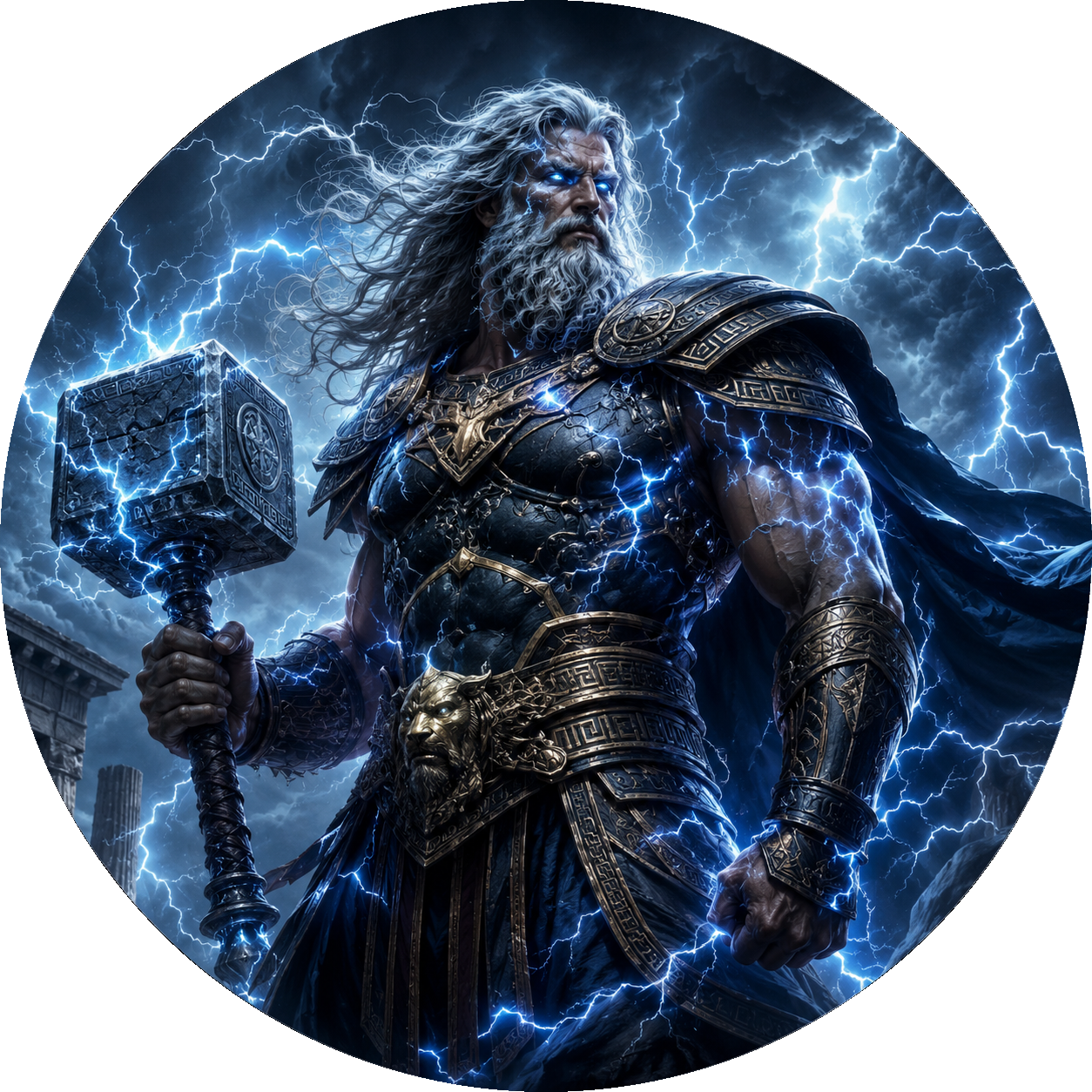
My Thor 2D avatar centered in the Olympus environment.
My Thor avatar anchors the Olympus visual identity · Zeus / command · Odin / counsel · Thor / buildOriginal source preserved · direct 2D image layer · Retina-safe
My authority model

Three avatars. No blurred permissions.

I give each avatar a distinct identity, voice reference, Hermes profile reference, and allowlisted capability set. AIRI never becomes my tool authority.

Decision lane

Zeus

I use Zeus as my commander and primary operator for conversation, planning, and sanitized status reads. I retain final human authority.

Counsel lane

Odin

I use Odin for independent architecture counsel and red-team review, without mutation authority.

Build lane

Thor

I use Thor for bounded implementation and verification. I keep build requests worktree-scoped and approval-gated.

The system boundary

Voice is a pipeline, not a permission slip.

MIC / TEXT → local ASR adapter ↓ OLYMPUS ADAPTER → allowlisted avatar ID ↓ HERMES PROFILE → bounded authority lane ↓ LOCAL TTS → validated audio ↓ AIRI RENDERER → state + lip-sync Loopback-only. No direct shell. No private prompt export. No cloud fallback.
Hard boundary

What the avatar cannot do

Olympus rejects arbitrary shell, filesystem, browser, computer-use, hardware, subprocess, credential, and unbounded tool requests. Handoffs are structured, explicit, and human-approval gated.

The public manifests contain environment references—not secrets, local paths, ports, prompts, or machine state.
My Apple Silicon implementation

I build it in layers.

I do not start by wiring a voice button to a giant agent. I prove each layer on an arm64 Mac, then connect it to the next.

1
Verify native toolingI confirm arm64 Node, pnpm, Xcode command-line tools, and a Metal-capable local runtime.
2
Run AIRI aloneI build and prove the upstream AIRI renderer before I introduce Hermes.
3
Separate the Hermes lanesI create isolated Zeus, Odin, and Thor profiles without cloning private credentials, channels, memory, or browser state.
4
Install the adapter boundaryI allow only health, chat, avatar-state, handoff, and status-read, with body, timeout, origin, and output limits.
5
Add voice one leg at a timeI prove ASR, conversation, TTS, playback, visible state transitions, and finally microphone-to-lip-sync.
6
Run acceptance and publish only sanitized artifactsI require manifest validation, security scans, runtime evidence, and public documentation before I call a lane live.
My truthful status

Live build, honest gates.

Contract acceptedI publish the avatar manifests, adapter boundary, Apple Silicon sequence, and lockdown rules.
Public site liveI deploy this page and guide from my owned repository.
Renderer integration heldI do not claim end-to-end AIRI/Hermes visual acceptance from documentation alone.
Hardware untouchedI have not modified the Hermes/Desktop product on any operator machine.